This post contains affiliate links. If you buy through them, we may earn a small commission at no extra cost to you. It helps keep Tuxedo in tennis balls.
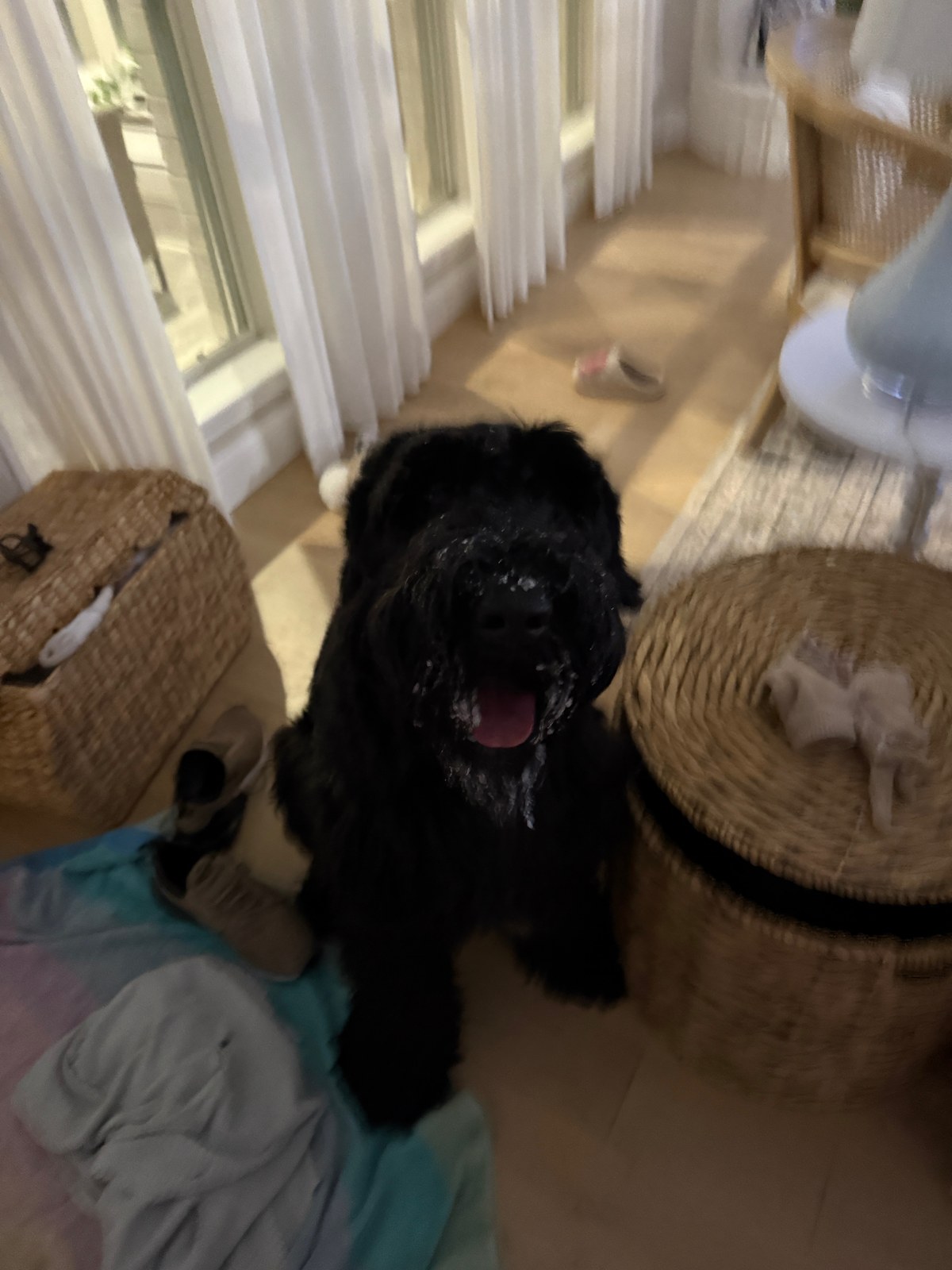
Here in Texas, September is still summer with a costume on. The afternoon we found out what that means for a dog was the afternoon Tuxedo — 105 pounds of Giant Schnauzer enthusiasm — planted himself in a parking lot and refused to take another step. The asphalt didn’t feel that bad through my shoes. That’s exactly the problem: he wasn’t wearing any. Four bare pads on hot blacktop, carrying more weight per step than most dogs will ever weigh. So we dug into what vets actually say about paw pads, and it turns out the fix costs about as much as a bag of treats.
Paw pads do more work than you think
VCA Animal Hospitals describes footpads as the structures that absorb every step, provide traction to prevent slipping, and insulate the foot from extreme weather, hot and cold [1]. On a giant breed, “every step” is a serious load — and the list of things that damage pads reads like a big dog’s daily commute: scorching summer sidewalks, icy winter surfaces, salt and corrosive chemicals, and sharp debris [1]. VCA’s rule of thumb is blunt and useful: if you would not want to walk barefoot somewhere, your pet should not walk there either [1].
The pavement math that surprised us
The AKC’s chief veterinarian, Dr. Jerry Klein, warns that pavement like asphalt can become hot enough to cause discomfort, blisters, and outright burns on paw pads [2]. The number that stopped us: citing Journal of the American Medical Association data, the AKC notes that when the air is 86°F, asphalt can register 135°F [2]. Their guidance is that 85 degrees and up, without a chance for the pavement to cool, may already be too hot to safely walk a dog [2].
The test costs nothing: press your hand flat on the pavement for ten seconds. Too hot for your hand means too hot for the paws — and that applies to sand, metal, concrete, and dirt as well [2]. Walk in the cooler morning and evening hours, favor grass and shade, and build pavement time up gradually in mild weather so pads can toughen [2].
Where a paw wax fits in
Even with smart timing, a big dog’s pads take a beating, and both sources point at conditioning and protection between the extremes: the AKC lists paw moisturizers to prevent cracking and booties among its prevention strategies [2], and VCA lists heat, ice, and road chemicals as the repeat offenders a barrier helps against [1].
The category classic is Musher’s Secret Paw Wax — originally developed for sled dogs, which is a reassuring resume for a product whose whole job is protecting working paws. The 60g tin runs $12.99 at the time of writing, rated 4.6 stars across 36,234 ratings and sitting at #7 in Dog Paw Protectors [3]. The listing’s ingredient panel is refreshingly short: 100% natural, food-grade, plant-based waxes, non-toxic and non-staining [3] — which matters, because every dog licks their feet, and every paw product eventually ends up partly inside the dog. Full transparency: we researched this one and it’s going in Tuxedo’s kit; the long-term Texas-summer verdict will follow.
The routine is simple: a thin layer worked into the pads before walks forms a breathable barrier between the pad and whatever the ground is doing that day — heat, ice, or the salt and de-icing chemicals VCA flags in winter [1][3].
The honest catches
- Wax is not a heat shield. Nothing makes 135°F asphalt safe. The ten-second hand test still decides whether the walk happens at all [2]; wax is for the marginal conditions, not the dangerous ones.
- It wears off. A barrier that’s safe to lick is also a barrier that doesn’t last forever — plan on reapplying regularly, especially before long walks.
- A giant breed burns through a 60g tin. Four big paws, several times a week — if it earns a permanent spot in your kit, the larger sizes are the better math.
- Damaged pads need a vet, not a balm. VCA’s first-aid guidance: clean the wound, control bleeding with 10–15 minutes of pressure, and call the vet if bleeding won’t stop or you see swelling, odor, or discharge [1]. Wax is prevention, never treatment.
- For extremes, booties win. The AKC recommends proper dog boots with wrap-around closures and grip soles for serious conditions [2] — if your dog will tolerate them, which is its own adventure.
Buyer checklist for paw pad protection
- Food-grade, lick-safe ingredients — assume everything on the paw ends up in the dog [3]
- A breathable barrier formula, not a heavy grease that traps moisture
- Enough volume for your dog’s size — giant breeds should skip the sample tins
- The ten-second hand test before every warm-weather walk, and cooler walk times in summer [2]
- A habit of checking pads after walks — VCA’s barefoot rule and a quick look catch problems while they’re small [1]
Sources
- VCA Animal Hospitals — First Aid for Torn or Injured Foot Pads in Dogs: https://vcahospitals.com/know-your-pet/first-aid-for-torn-or-injured-foot-pads-in-dogs (accessed 9/5/2026)
- American Kennel Club — How to Protect Dog Paws From Hot Pavement: https://www.akc.org/expert-advice/health/dog-paws-hot-pavement/ (accessed 9/5/2026)
- Amazon product listing — Musher’s Secret Paw Wax (60g): price, rating, review count, category rank, and ingredient claims as of 9/5/2026
Leave a Reply