
This post contains affiliate links. If you buy through them, we may earn a small commission at no extra cost to you. It helps keep Tuxedo in tennis balls.
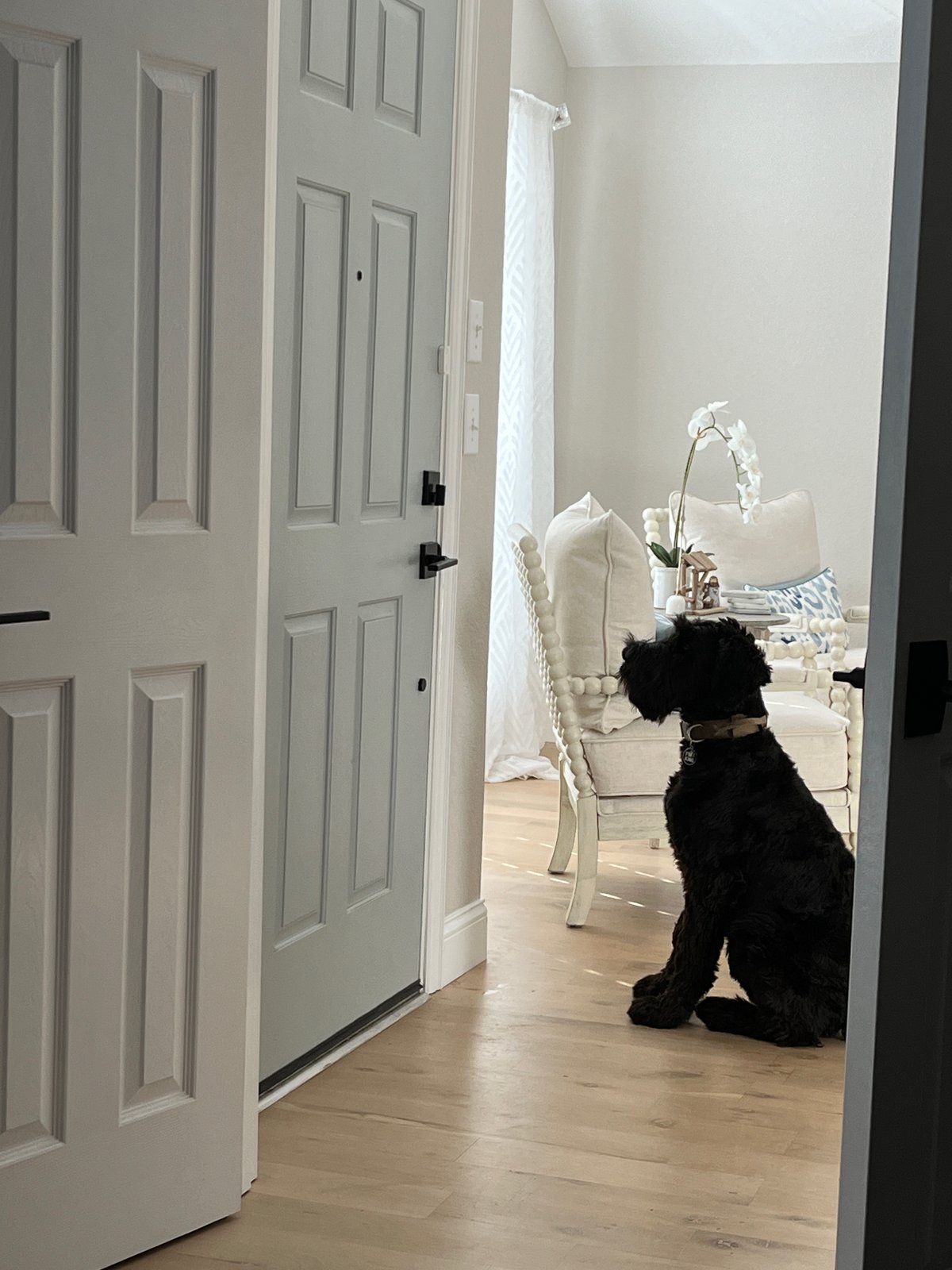
Fall is coming, and thanks to the chicken situation, Tuxedo is logging more yard miles than a mail carrier. Morning patrol, afternoon patrol, the extremely important dusk patrol. All of that mileage lands on four bare paws, and the season ahead brings the stuff paws hate — cold mornings, wet ground, and eventually the ice and de-icing salt that turn a casual walk into a chemistry experiment. So this week we started the project every big-dog owner puts off until the first freeze: boots. Buying them is the easy part. Convincing a 105-pound Giant Schnauzer that shoes are not a personal insult is the actual work, which is exactly why we’re starting in September instead of January.
When paws actually need help
The AKC’s rule of thumb is the cleanest one we’ve seen: if you wouldn’t walk barefoot on a surface — a scalding sidewalk, a freezing one — neither should your dog [1]. Boots earn their keep against frostbite, heat blisters, puncture wounds from rough terrain, and the toxic de-icers and road salts that show up on every treated surface all winter [1]. VCA’s guidance adds the detail most people miss: booties don’t just block chemical irritation from salt-treated sidewalks, they also keep snow from packing into painful ice balls between the toes [2]. And their common-sense ceiling applies no matter what’s on the paws: if it’s too cold out for you, chances are it’s too cold for your dog too [2].
Sizing is the whole game
Almost every bad boot review on the internet is really a sizing story — the boot flew off in the yard, the boot rubbed, the dog refused. The AKC’s method takes two minutes: press your dog’s paw onto a piece of paper, trace it, and measure across the widest part, then buy off that number [1]. Weight charts are a rough guide at best; paw width is the real spec, and even the manufacturer of the boots we bought says measuring the paw is the key and weight is only a secondary reference [3]. After they arrive, the AKC recommends an indoor test before any real walk: confirm the paw stays seated in the boot and the sole actually grips [1].
The $29 set we’re starting with
We went with the QUMY dog boots — $28.99 at the time of writing for a set of four in size 7, rated 4.0 stars across 36,146 ratings, and the number one best seller in dog boots on Amazon [3]. The design solves the two big-dog problems: a wide split-seam opening so you’re not wrestling a paw into a sock, and two adjustable straps — reflective, usefully, for those dusk patrols — that cinch above the paw so the boot stays put [3]. The sole is a rugged, slip-proof rubber that handles rough ground and, as a bonus, gives older dogs traction on hardwood [3]. A 4.0 rating on 36,000 reviews is honest for this category: boots that fit well work well, and boots bought by weight chart end up in the yard somewhere.
The acclimation project
No dog puts on boots for the first time with dignity. The AKC’s protocol is gradual and treat-heavy: let your dog investigate the boots and reward interest, start with a single boot, then both, indoors, in short sessions that get longer — praise and treats throughout, and watch for stress signals rather than pushing through them [1]. Tuxedo’s first session produced the high-step march every boot video on the internet promised us, a performance the chickens watched through the fence with what we can only describe as satisfaction. Session two was already less theatrical. The treat pouch from earlier in this saga is doing heavy lifting again — every calm step in boots gets paid.
The honest catches
- Measure or regret it. The single biggest failure mode is skipping the paper-trace measurement and guessing from weight [1][3]. Ten minutes with a pencil saves a return.
- Expect the funny walk. Every dog high-steps at first. It fades with short, rewarded indoor sessions — don’t debut boots on the day of an actual snowstorm [1].
- Boots aren’t the only tool. For dogs who never accept them, VCA points to paw balm as the fallback — a thick layer before walks blocks salt and ice balls — plus checking between the toes and rinsing paws after salted routes [2].
- Check the fit every season. Straps stretch, paws change with coat and nail length, and a boot that fit last February may wobble now. Re-do the indoor test each year [1].
Buyer checklist for big-dog boots
- Size from a traced paw-width measurement, not a weight chart [1][3]
- Wide opening for big paws — split-seam designs go on without a wrestling match [3]
- Adjustable straps that cinch above the paw so boots survive a sprint [3]
- Grippy, rugged sole — traction is half the point [1][3]
- Reflective details if your dog patrols at dawn or dusk [3]
- An indoor trial period with treats before the first real cold-weather walk [1]
- Paw balm on standby as the plan B, per the vet team [2]
Sources
- American Kennel Club (AKC Staff) — Choosing the Right Dog Boots or Shoes for Your Dog: https://www.akc.org/expert-advice/lifestyle/dog-boots/ (accessed 9/19/2026)
- VCA Animal Hospitals — Four Strategies for Cold Weather Paw Protection: https://vcahospitals.com/resources/conditions-dog/skin-coat/four-strategies-for-cold-weather-paw-protection (accessed 9/19/2026)
- Amazon product listing — QUMY Dog Shoes for Hot Pavement / Snow Boots & Paw Protectors (set of 4, split-seam opening, two adjustable reflective straps, slip-proof sole): price, rating, review count, best-seller rank, and product claims as of 9/19/2026
Leave a Reply