
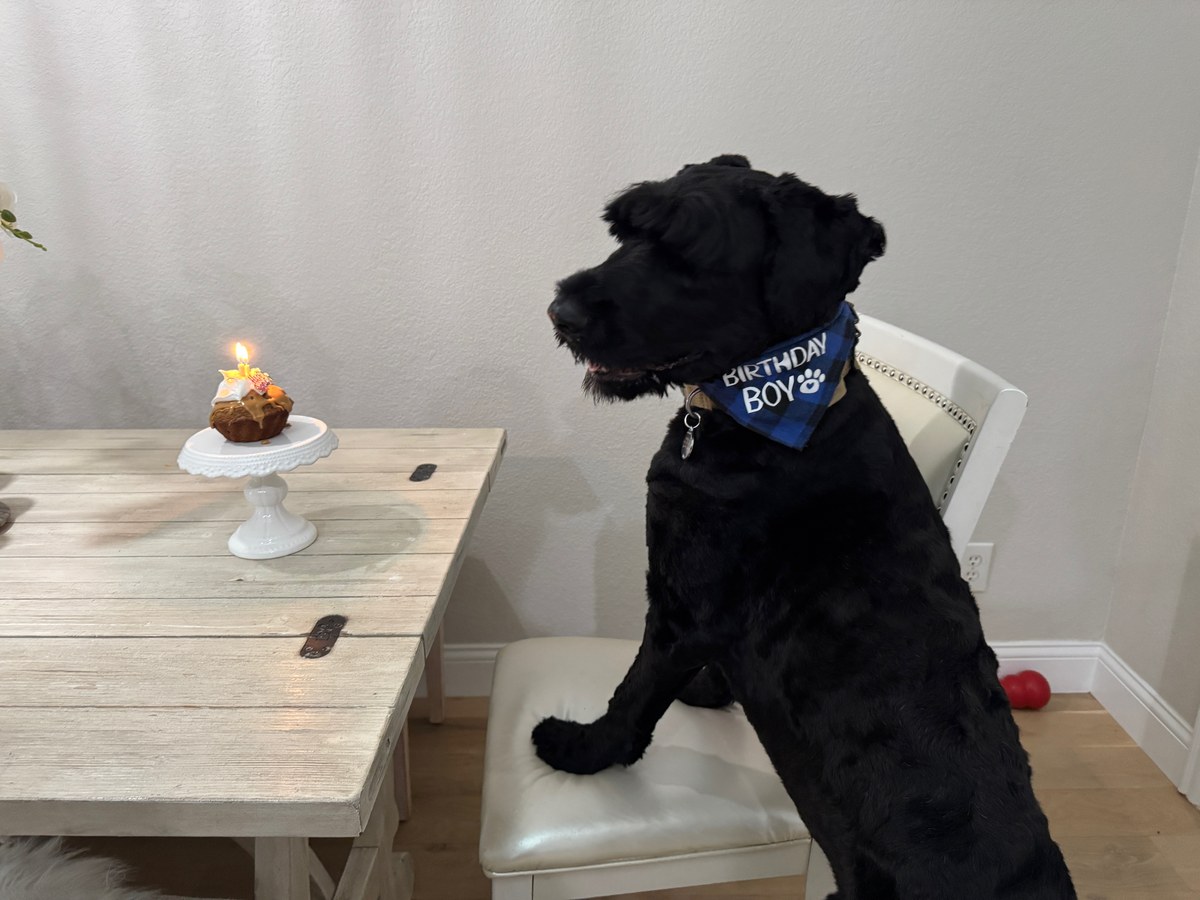
This post contains affiliate links. If you buy through them, we may earn a small commission at no extra cost to you. It helps keep Tuxedo in tennis balls.
Tuxedo’s ears are classic Schnauzer: folded over, lined with hair, and pointed at the ground — which is to say, they’re built to trap exactly the warm, damp darkness ear problems love. Every head shake after a bath, every good roll in the grass, we’re reminded that a big dog’s ears are a maintenance item. So we went looking for what vets actually say about ear cleaning, and it turns out most owners — us included — have been doing at least one part of it wrong.
Why dog ears go bad so often
VCA Animal Hospitals calls ear infection (otitis externa) one of the most common types of infections seen in dogs [1]. Dogs with large, floppy, or hairy ears carry higher risk — that’s a direct hit on schnauzers, doodles, spaniels, and most of the big breeds this site covers. And the root cause often isn’t dirt at all: allergies are involved in roughly 43% of ear infection cases, and ear infections show up in 65–80% of dogs with food allergies [1]. So recurring ear trouble is a vet conversation, not just a cleaning problem.
Ignoring an infected ear gets expensive fast. VCA warns that untreated infections can produce an aural hematoma — a blood-filled swelling of the ear flap that requires surgery — and deep infections can damage or rupture the eardrum, leading to inner-ear infection and even permanent hearing loss [1]. The signs to watch: head shaking, scratching at the ear, redness, and black or yellowish discharge [1].
The vet method (and the two things to stop doing)
VCA’s ear-cleaning instructions are refreshingly specific: fill the ear canal with a veterinary ear cleaning solution, massage the base of the ear for about 30 seconds until you hear a squishing sound, let the dog shake his head, then wipe out the loosened debris with a cotton ball or gauze — going no deeper than your finger reaches [2].
The two mistakes vets keep seeing: first, Q-tips. VCA is blunt — never use a cotton-tipped applicator in the canal; it can damage the canal or eardrum and pushes debris deeper [2]. Second, homemade solutions. Cleaners containing hydrogen peroxide or alcohol can irritate the canal, especially one that’s already inflamed [2]. The fix for both is the same: a proper veterinary-formulated cleaner and a cotton ball.
The cleaner vets reach for
The category leader is Virbac Epi-Otic Advanced — $13.59 at the time of writing, rated 4.7 stars across 23,156 ratings, and sitting at #147 in all of Pet Supplies [3]. Full transparency: we researched it and it’s what we’re putting in Tuxedo’s grooming kit; we haven’t run it long-term yet.
Why it fits the vet criteria: it’s a veterinary-formulated cleanser with a neutral pH, made to cleanse wax and debris and dry the ear canal after water gets in [3] — and it contains neither the hydrogen peroxide nor the alcohol VCA warns about [2][3]. It’s also the kind of low-drama bottle that makes the 30-second squish method actually happen on bath day instead of getting skipped.
The honest catches
- More is not better. VCA cautions that over-cleaning can itself irritate the canal and lead to infection — clean when needed, at the frequency your vet recommends, not on a rigid schedule [2].
- A cleaner is not a treatment. If the ear is red, painful, smelly, or discharging, that’s a vet visit — an infected ear needs diagnosis and medication, not just a rinse [1].
- Recurring infections mean something upstream. With allergies driving so many chronic ear cases, a dog whose ears keep flaring needs the underlying cause chased down, not a bigger bottle of cleaner [1].
- Expect mess. The method ends with your dog shaking cleaner and ear gunk in a two-meter radius. Do it outside or in the bathroom, not next to the couch.
Buyer checklist for a dog ear cleaner
- Veterinary-formulated solution — no hydrogen peroxide, no alcohol, no homemade mixes [2]
- A drying action if your dog swims or gets bathed often — trapped moisture is the enemy [1]
- Cotton balls or gauze on hand — and no Q-tips anywhere near the canal [2]
- The 30-second technique: fill, massage to the squish, shake, wipe finger-deep only [2]
- A vet appointment instead, if there’s redness, pain, odor, or discharge [1]
Sources
- VCA Animal Hospitals — Ear Infections in Dogs (Otitis Externa): https://vcahospitals.com/know-your-pet/ear-infections-in-dogs-otitis-externa (accessed 9/2/2026)
- VCA Animal Hospitals — Instructions for Ear Cleaning in Dogs: https://vcahospitals.com/know-your-pet/instructions-for-ear-cleaning-in-dogs (accessed 9/2/2026)
- Amazon product listing — Virbac Epi-Otic Advanced Ear Cleanser: price, rating, review count, category rank, and product claims as of 9/2/2026
Leave a Reply